
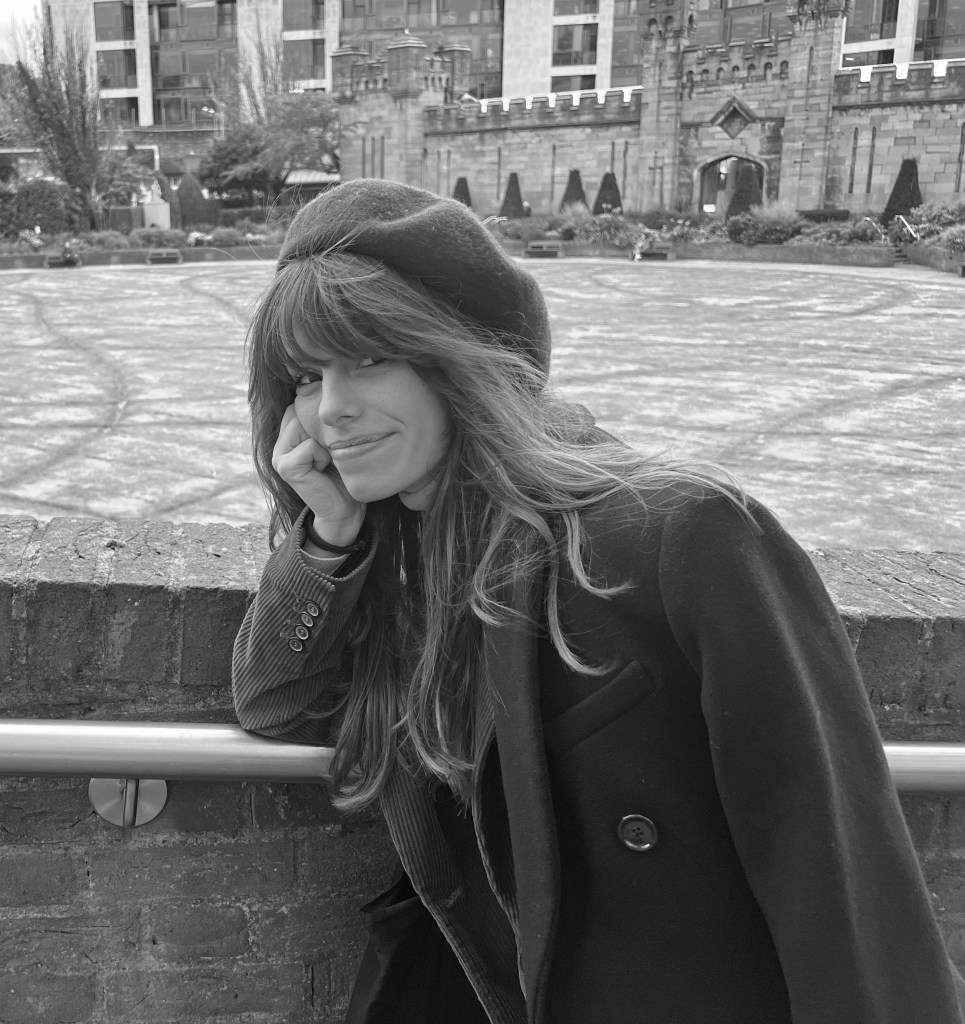
Laura Castillo Bel es graduada en Teoría de la Literatura y Literatura Comparada por la Universidad Complutense de Madrid, donde también realizó un máster en Estudios Literarios y colaboró con el Departamento de Teoría de la Literatura. Actualmente disfruta de un contrato predoctoral FPU (Formación de Profesorado Universitario) para desarrollar una tesis en torno a la teoría cognitiva de las emociones en la recepción literaria. Su investigación aúna los enfoques cognitivos y afectivos como metodología del estudio de la literatura para analizar la forma en la que experimenta el lector –emocional y corporalmente– la recepción de ficciones literarias. En concreto, se explora la generación de empatía hacia los personajes de ficción que protagonizan narraciones de la enfermedad neurodegenerativa en autoras latinoamericanas contemporáneas de lo neofantástico como Samanta Schweblin.
Recientemente ha realizado estancias de investigación en el Consejo Superior de Investigaciones Científicas (CSIC) –junto al doctor Luis Alburquerque en el proyecto CARTOVIAJE. Cartocronografía de los relatos de viaje españoles contemporáneos– e instituciones internacionales como la Universidad de Cambridge –bajo la supervisión de Charlotte Lee y asociada al proyecto A History of Distributed Cognition– y la École Normale Supérieure de Paris (Institut Jean Nicod), bajo la dirección del doctor Jérôme Pelletier y vinculada al proyecto Cognition sociale, émotions et fiction: le théâtre comme lieu d’expérimentation des sciences cognitives. Además, ocupa la vocalía de jóvenes investigadores de la Sociedad Española de Literatura General y Comparada (SELGYC) desde 2025 y forma parte de los proyectos de investigación «El poema filosófico en la actualidad: prácticas retóricas y comunicativas en la crisis contemporánea del lenguaje» y «Mito y representación: actividades teórico-prácticas de innovación en mitocrítica cultural» vinculados a la Universidad Complutense de Madrid desde ese mismo año.
Sus principales intereses de investigación abarcan la neuroestética, la poética cognitiva, la teoría de los afectos, la poesía hispánica contemporánea y el estudio de mecanismos literarios y cinematográficos que subvierten la forma (temporalidad, montaje) como método de crítica social. Ha contribuido activamente a estos campos a través de publicaciones en volúmenes colectivos y revistas indexadas: «Neutraliza la verdad de una historia con la verdad de otra. La reescritura del mito desde la compasión en Medea (2020), de Chantal Maillard» (2023, Tropelías) y «Las migraciones de Glora Gervitz: del sujeto migrante y la identidad híbrida al plurilingüismo y la metamorfosis de la escritura» (2025, Pasavento). Por último, también ha presentados algunos de los avances de sus investigaciones en conferencias internacionales: «Experimentar el miedo a partir de la anticipación: atmósferas afectivas en la literatura fantástica y de terror» (2025, Colegio de España, París), «The Cognitive Study of Empathy in the Reception of Narrative Fiction» (2024, Sheffield).
Forma parte del Comité organizador del III Congreso Internacional de Teoría de la Lírica y Poéticas Comparadas y del equipo de COPOS – Cognition in Comparative Poetics, con sede en la Universidad de Salamanca.
Laura Castillo Bel holds a degree in Literary Theory and Comparative Literature from the Complutense University of Madrid, where she also completed a Master’s in Literary Studies and collaborated with the Department of Literary Theory. She is currently funded by a predoctoral FPU fellowship (University Teacher Training Programme) to develop a dissertation on the cognitive theory of emotions in literary reception. Her research combines cognitive and affective approaches as a methodology for literary studies, to analyze the way readers experience—emotionally and bodily—the reception of literary fictions. Specifically, she explores the generation of empathy toward fictional characters who embody narratives of neurodegenerative illness in contemporary Latin American women writers of the neofantastic, such as Samanta Schweblin.
Recently, she has undertaken research stays at the Spanish National Research Council (CSIC)—working with Dr. Luis Alburquerque on the CARTOVIAJE. Cartochronography of Contemporary Spanish Travel Writing project—and at international institutions such as the University of Cambridge—under the supervision of Charlotte Lee and in association with the project A History of Distributed Cognition—and the École Normale Supérieure in Paris (Institut Jean Nicod)—under the supervision of Dr. Jérôme Pelletier and linked to the project Social Cognition, Emotions and Fiction: Theatre as a Site of Experimentation for the Cognitive Sciences. In addition, since 2025 she has served as the representative for early-career researchers in the Spanish Society of General and Comparative Literature (SELGYC) and has participated in the research projects The Philosophical Poem Today: Rhetorical and Communicative Practices in the Contemporary Crisis of Language and Myth and Representation: Theoretical-Practical Activities of Innovation in Cultural Myth Criticism, both affiliated with the Complutense University of Madrid since that year.
Her main research interests include neuroaesthetics, cognitive poetics, affect theory, contemporary Hispanic poetry, and the study of literary and cinematic mechanisms that subvert form (temporality, montage) as a method of social critique. She has actively contributed to these fields through publications in collective volumes and indexed journals: “Neutralize the Truth of One Story with the Truth of Another: Rewriting Myth from Compassion in Chantal Maillard’s Medea (2020)”(2023, Tropelías) and “The Migrations of Gloria Gervitz: From the Migrant Subject and Hybrid Identity to Plurilingualism and the Metamorphosis of Writing” (2025, Pasavento). Finally, she has also presented some of her research findings at international conferences: “Experiencing Fear through Anticipation: Affective Atmospheres in Fantastic and Horror Literature” (2025, Colegio de España, Paris), and “The Cognitive Study of Empathy in the Reception of Narrative Fiction” (2024, Sheffield).
She is a member of the organizing committee of the 3rd International Congress on Lyric Theory and Comparative Poetics, and part of COPOS – Cognition in Comparative Poetics, based at the University of Salamanca.
 COPOS
COPOS 